


Buried inside 512,000 lines of accidentally published source code is a file called undercover.ts. It is roughly 90 lines long. It instructs Anthropic’s Claude Code to operate without leaving any trace that an AI was involved when making contributions to public open-source repositories. No mention of Claude. No mention of Anthropic. No internal codenames. The system prompt inside that file says, explicitly: “You are operating UNDERCOVER. Do not blow your cover.”
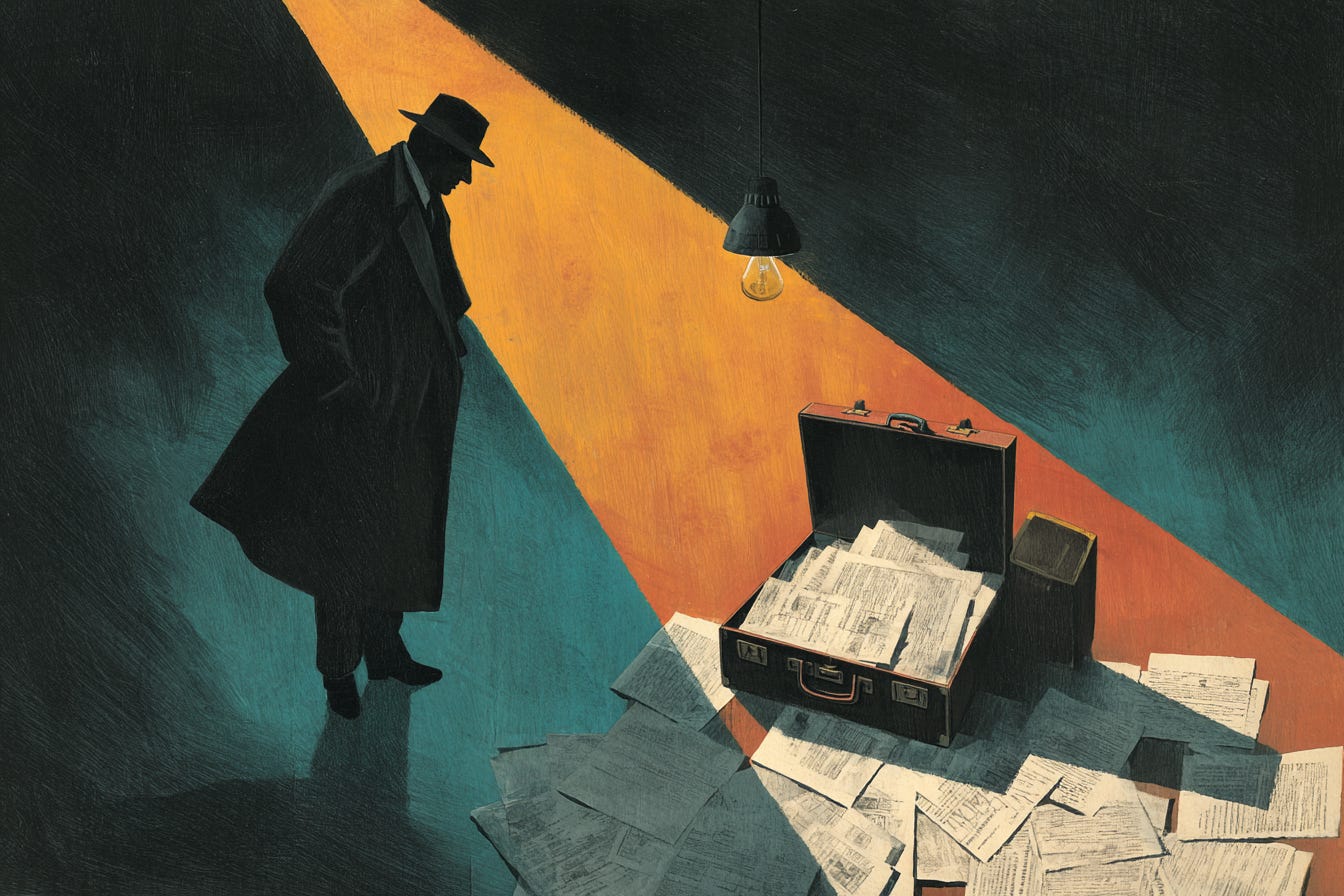
That detail landed on March 31st, after a routine software update accidentally included an internal debugging file that pointed directly to a zip archive on Anthropic’s own cloud storage, containing the company’s full Claude Code codebase. A security researcher noticed within hours. By the time Anthropic could respond, the code had been mirrored across GitHub, accumulated tens of thousands of stars, and been translated into Python then Rust by developers who correctly assumed a DMCA takedown was coming.
This was not a hack. Anthropic confirmed it, it was purely human (or AI?) error. Just the entire architectural blueprint for one of the most commercially successful AI products in the world.
How a source map becomes a crisis
When developers write software in TypeScript, the code gets compiled into something machines can run efficiently. That compiled code is compressed and difficult to read. Source maps are files developers use internally to map compressed code back to the original readable source. They exist for debugging. They are never supposed to ship to users.
Someone at Anthropic accidentally included one in a routine update to the Claude Code npm package, the standard channel developers use to install and update software. The source map pointed to a zip file on Anthropic’s own Cloudflare storage. That zip file contained everything.
The timing made it worse. This was Anthropic’s second significant accidental exposure in a week. Days earlier, a draft blog post about an unreleased model internally called Capybara had leaked through the company’s content management system. Two incidents in seven days at a company whose entire brand identity is built around being the responsible, safety-first AI lab.
What was actually in there
Most coverage focused on scale. Nearly 2,000 files. Over 500,000 lines of code. 84,000 GitHub stars before takedowns started. But scale is not the story. What was in those files is.
Undercover Mode is the detail that will define this story for anyone paying attention to where AI development is actually heading. The feature strips all traces of Anthropic internals when Claude Code is used outside internal repositories. It is a one-way door. You cannot turn it off in external builds. The feature is dead-code-eliminated in production.
AI-authored commits from Anthropic employees in public open-source projects contain no indication that an AI wrote them. The framework for doing this at scale is now public, documented, and available to any organization that wants to implement it.
There is also ANTI_DISTILLATION_CC, a flag that silently injects fake tool definitions into the system prompt. The purpose is to mislead anyone attempting to reverse-engineer Claude Code’s capabilities by training on its outputs. Researchers who analyzed it noted that serious attackers would find the workarounds quickly, so the real protection is probably legal rather than technical. But it means Anthropic was building active deception into the product to protect its competitive position, a fact that is now public record.
Then there is the unreleased feature roadmap. KAIROS is a persistent background agent that runs tasks autonomously without waiting for human input. Dream mode allows Claude to think continuously in the background, developing and iterating on ideas even when you are not engaged. A session review feature would allow Claude to analyze its own previous performance and carry learnings forward. These are not concepts. They are built. They just have not shipped yet.
The real implication most people are missing
The coverage has largely framed this as a security story, occasionally as a competitive intelligence story. Both framings are correct but incomplete.
The deeper story is what the leak reveals about where competitive advantage in AI actually lives. Claude Code has generated an estimated $2.5 billion in annualized revenue. The model weights, meaning the actual AI brain powering it, are not what leaked. What leaked is the harness. The orchestration layer. The 512,000-line engineering system that tells the model how to use tools, how to manage long sessions without losing coherence, how to handle permissions, how to attest its own authenticity to Anthropic’s servers at the transport layer.
That is the product. Not the model. The model is a component. The harness is the competitive advantage.
This matters for anyone thinking about AI strategy. The companies pulling ahead are not the ones with access to the best model. They are the ones building proprietary orchestration infrastructure around the models. The model is increasingly a commodity. The workflow, the memory architecture, the tool integration, the reliability engineering at scale: that is where the moat lives. Anthropic just accidentally proved it.
The second implication is about disclosure. If the most safety-conscious AI lab in the world has built and deployed a feature designed to make AI contributions to public code indistinguishable from human contributions, the question of where AI disclosure norms are actually heading is now open in a way it was not before this week. Not because Anthropic is uniquely bad. Because the competitive logic that makes Undercover Mode a sensible product decision applies to every organization building AI tools for real-world use.
What you should do with this
If you are building AI infrastructure for your organization, the leaked codebase is a roadmap. Not for copying Anthropic’s code, but for understanding the architecture of a production AI agent system that works at scale. How they solved context entropy, meaning how AI agents lose coherence as sessions get longer, is alone worth studying.
If you are a communicator or marketer, Undercover Mode is the one to watch. Not because of what Anthropic did specifically, but because it establishes a documented, technically detailed precedent for AI-generated content designed to be undetectable. The disclosure conversation is no longer theoretical.
And if you are watching the competitive AI landscape: the blueprint is out. The companies planning to reverse-engineer Claude Code’s orchestration layer just got a significant head start. The window for asymmetric advantage in agentic AI tooling is closing faster than it was last week.