


I’ve watched it happen dozens of times now.
A company decides they need AI. They assemble a team. They start evaluating tools. They build a proof of concept. They run pilots.
And then nothing happens.
The project stalls. The team gets frustrated. Leadership loses patience. Eventually, someone quietly shelves the whole thing and everyone moves on to the next initiative.
Here’s what nobody wants to admit: the project was doomed from the start.
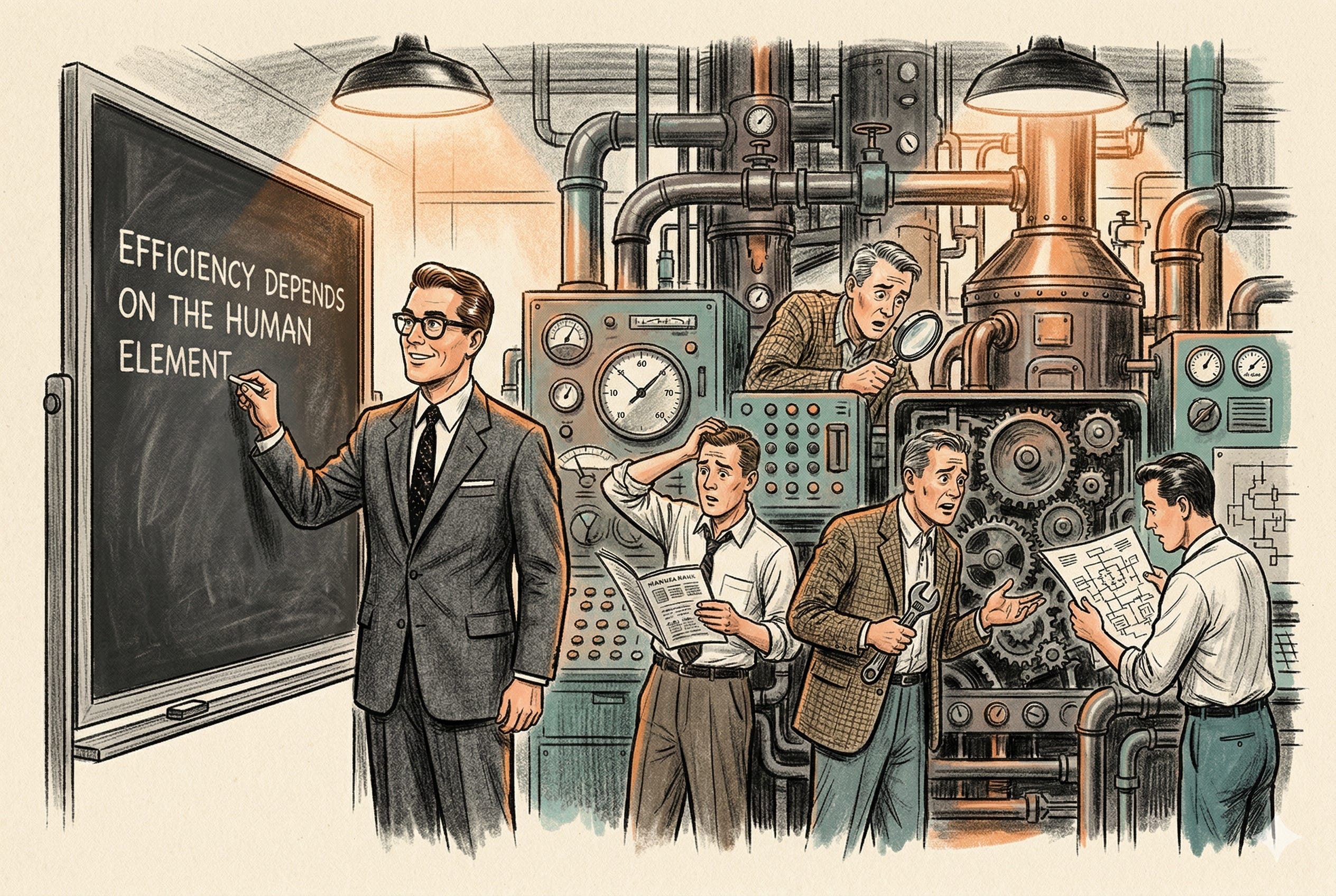
The failure had nothing to do with the technology. It had everything to do with the fact that nobody could explain what they were actually trying to do in plain language.
The 95% Problem Nobody Talks About
The numbers are brutal. 95% of generative AI implementations are falling short. Only 5% of AI pilot programs achieve rapid revenue acceleration.
You’d think the problem would be technical. Bad models. Poor data quality. Integration challenges.
You’d be wrong.
The most common reason for AI project failure? Misunderstandings and miscommunications about the intent and purpose of the project.
Poor communication is probably the biggest cause of issues with AI projects.
Think about that for a second. Companies aren’t failing because they picked the wrong large language model. They’re failing because they can’t articulate what problem they’re solving or why it matters.
I see this constantly. Someone in leadership reads an article about how AI is going to transform everything. They announce an AI initiative. They form a committee. They start evaluating vendors.
But if you ask anyone on that team to explain what success looks like in concrete terms, you get vague answers about “efficiency” and “innovation” and “staying competitive.”
That’s not a strategy. That’s a press release.
The Tool Obsession That Kills Everything
Here’s the pattern I see over and over: teams spend months arguing about which tools to use before they’ve spent a single hour defining what they’re trying to accomplish.
Should we use Claude or GPT-5? Do we need a vector database? Should we build custom models or use APIs? What about open source versus proprietary?
These are all valid questions. But they’re the wrong questions to start with.
Tool obsession is a symptom of avoiding the hard work. It’s easier to debate the technical merits of different platforms than to have uncomfortable conversations about whether your current processes are broken or whether your team actually understands the business problem.
The research backs this up. Programs that succeed begin with unambiguous business pain and draft AI specifications only after stakeholders can articulate the non-AI alternative cost.
In other words: fix the narrative first, then choose the tool.
I learned this the hard way. Early in my own AI journey, I was obsessed with finding the perfect tool for every task. I’d spend hours testing different platforms, comparing features, reading documentation.
What I should have been doing? Figuring out what I was actually trying to accomplish and why the current approach wasn’t working.
Once I had clarity on the problem, the tool selection became obvious. Sometimes it was AI. Sometimes it wasn’t.
Plain Language as Competitive Advantage
The companies winning with AI have something in common: they can explain their strategy in language a smart eighth-grader would understand.
They don’t talk about “leveraging machine learning to optimize operational efficiency.” They say things like “we’re using AI to automatically categorize customer support tickets so our team can respond faster to the urgent ones.”
That’s specific. That’s measurable. That’s something you can build toward.
The data supports this approach. Organizations reporting significant financial returns from AI are twice as likely to have redesigned end-to-end workflows before selecting modeling techniques.
They started with the story. They mapped out the current process. They identified the friction points. They articulated what success would look like. Then they picked the technology.
Meanwhile, most companies do the opposite. They start with the technology and hope a use case emerges.
This creates a trust gap. Only 11% of employees agree their AI rollout has been effective, compared to 25% of leaders. When your team doesn’t understand what you’re building or why it matters, they won’t use it. And if they don’t use it, it doesn’t matter how sophisticated your models are.
The Leadership Problem
Here’s something that surprised me when I started paying attention: 84% of failed AI projects cite leadership failures as the primary cause.
The problem isn’t that leaders don’t support AI. The problem is that too few are actively learning, using, or communicating about it.
I see this in my own work. When I talk to leadership teams about AI implementation, they want to delegate it entirely to their technical teams. They’ll fund the initiative. They’ll approve the budget. But they won’t get their hands dirty.
That doesn’t work.
Employees won’t adopt what they don’t see their leaders using. If the CEO isn’t experimenting with AI tools, if the VP of Marketing can’t articulate how AI fits into the strategy, if leadership isn’t visibly learning alongside the team, why would anyone else take it seriously?
The companies that succeed have leaders who can tell the story. They can explain what problem AI solves. They can describe what success looks like. They can admit what they don’t know and model the learning process.
This isn’t about being the most technical person in the room. It’s about being the person who can translate between the clouds and the ground. Between what’s possible and what’s practical.
Start With Story, Not Stack
I’ve built multi-agentic systems. I’ve tested dozens of tools. I’ve implemented AI workflows across analytics, creative, and strategy.
And here’s what I’ve learned: the technical part is the easy part.
The hard part is getting everyone aligned on what you’re trying to accomplish and why it matters.
The startups that succeed with AI pick one pain point, execute well, and partner smartly. They’re laser-focused on the problem, not the technology.
The enterprises that succeed start with narrative. They can explain their AI strategy in a clear story: what we’re solving, why it matters, how we’ll measure success, what changes for our team.
They invest in training. They communicate constantly. They treat AI adoption as a human transformation, not just a technical one.
Because here’s the reality: AI will only generate value if it’s understood, trusted, and consistently used by your workforce.
You can have the most sophisticated models in the world. You can have unlimited compute resources. You can have the best data pipeline.
But if your team doesn’t understand why they should use it, they won’t. And if they don’t use it, you’ve just spent a lot of money on very expensive shelf-ware.
The Framework That Actually Works
After watching dozens of projects succeed and fail, I’ve noticed a pattern. The ones that work follow a specific sequence:
1. Define the pain in plain language
What specific problem are you solving? Not “improve efficiency.” Not “leverage AI.” What exact friction point are you addressing?
Example: “Our customer support team spends 3 hours a day categorizing tickets manually, which delays response times and frustrates customers.”
2. Articulate the non-AI alternative
What would it cost to solve this problem without AI? This forces clarity on whether AI is actually the right solution or just the trendy one.
Example: “We could hire two more people to handle categorization, which would cost $120K annually. Or we could build better workflow automation without AI for $50K upfront.”
3. Describe success in concrete terms
What changes when this works? Be specific. Use numbers. Paint the picture.
Example: “Support tickets get categorized within 30 seconds instead of 30 minutes. Our team responds to urgent issues within an hour instead of by end of day. Customer satisfaction scores improve by 15%.”
4. Map the workflow before touching tools
Document the current process. Identify where AI fits. Clarify what stays human-driven. This prevents the common mistake of automating broken processes.
5. Choose the simplest tool that solves the problem
Only now do you evaluate technology. And you pick based on the problem you defined, not based on what’s newest or most sophisticated.
6. Communicate constantly
Keep the team informed. Share what you’re learning. Admit what’s not working. Celebrate small wins. Make the invisible visible.
This sequence works because it starts with clarity and builds toward implementation. Most teams do the opposite. They start with tools and hope clarity emerges.
It never does.
What This Means for You
If you’re leading an AI initiative right now, here’s my challenge: can you explain your project to someone outside your industry in two minutes or less?
Can you describe the specific problem you’re solving? Can you articulate what success looks like? Can you explain why AI is the right solution instead of something simpler?
If you can’t, you’re not ready to pick tools yet. You’re not ready to build pilots. You’re definitely not ready to roll out to production.
You need to do the narrative work first.
This isn’t about writing a better project charter or creating a more detailed roadmap. This is about being able to tell the story of what you’re building in language that creates clarity and builds trust.
Because here’s what I’ve learned after years of implementing AI across different contexts: the companies that win with AI are the ones who can explain what they’re doing in plain language first.
The technology is the easy part. The story is what makes it work.
Start there.